Let’s be honest, traditional annual feedback surveys rarely deliver the insights providers need.
In many care settings, the process follows a familiar pattern. Paper questionnaires are distributed once a year, mailed across or left in communal areas or staff rooms, and completed when time allows. By the deadline, many responses are brief, incomplete or rushed, simply to fulfil the requirement.
The challenge isn’t collecting feedback, but it’s collecting it when it still matters.
By the time responses are collated, entered into spreadsheets and summarised into reports, the information may already be several months old. If a service user raised concerns about meals, activities or communication months earlier, the opportunity to respond promptly and improve their experience may have been missed.
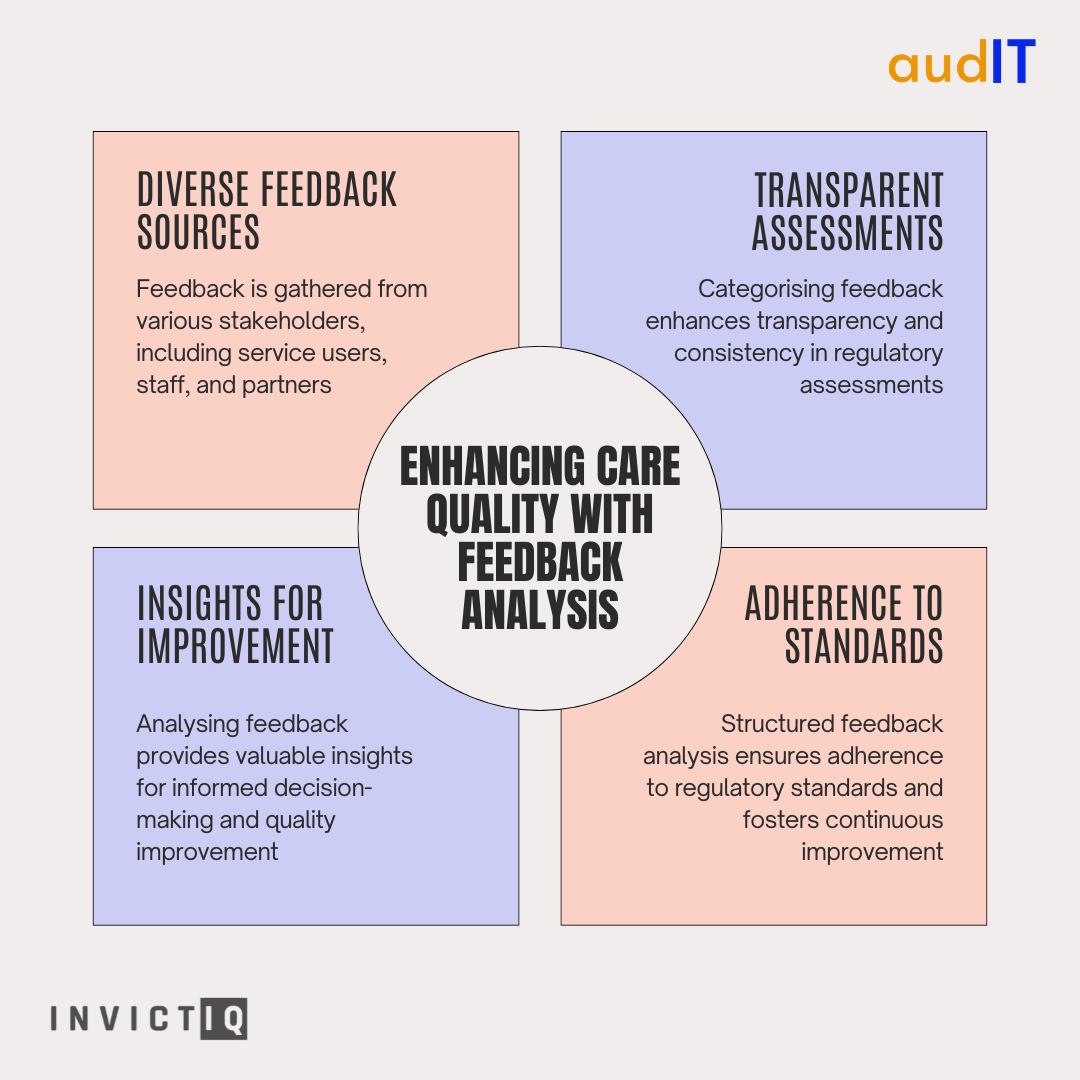
Feedback should be a continuous conversation, not an annual exercise. It has to become active, live CQC audit intelligence. The sooner concerns are identified, the sooner providers can act, improve outcomes and demonstrate that people’s voices genuinely shape the quality of care.
The Hidden Risk on the Shift
When you operate a multi-site care group, relying on a once-a-year snapshot is a massive gamble. It gives you a false sense of security while hiding the real trouble on the ground.
Think about the small things that slip through the cracks on a normal Tuesday. Say a new manager takes over a branch and team morale suddenly plummets. Or a service user quietly feels rushed during their breakfast routine but never makes an official complaint. Even small equipment frustrations, like a stiff window catch or a slow maintenance response get ignored because care workers just learn to put up with them.
Without a continuous way to listen, your leadership team has to rely entirely on a manager’s personal opinion that “everything is fine.” Meanwhile, some of your employees are quietly planning to hand in their notice!
The Catch with Daily Care Logs
Look at the latest data. The government’s recent technology survey shows that four out of five UK care providers, roughly 80%, have abandoned paper for digital social care records. It is a big step forward. But there is a massive catch.
A daily care log app only records the task. It tells you what happened, not how it actually felt to the human being receiving the care. This is the exact line between a “maker” tool and a “checker” system. Logging that a resident finished their lunch at 12:30 PM satisfies your daily records. But it does not tell you if they were given a genuine choice, or if they felt respected during the meal.
A dedicated quality engine like Audit on Cloud by InvictIQ catches those human details without making extra work for the floor:
- Quick Micro-Checkins. Swap the long, boring forms for a three-second tap pulse surveys on a tablet/phone. Service users can touch a simple icon about their afternoon, and staff can log a quick rating before they clock out.
- AI-Powered Sentiment Analysis. Every survey response is instantly analysed using AI to identify sentiment, recurring themes and emerging concerns. Leaders receive clear summaries, actionable insights and suggested areas for improvement, helping them respond faster and demonstrate that feedback leads to meaningful change.
- Closing the Risk Loop. If a staff member flags a concern about safety or supplies, the platform does not just save the answer in a folder. It automatically highlights the negative sentiment for prompt action taking
Standing in Front of the CQC with Confidence
The CQC Audit Intelligence has completely sharpened its focus, using 24 targeted investigative questions to judge adult social care services. They want hard, empirical proof that your leadership actively checks the checkers, listens to the floor, and acts on complaints.
When inspectors turn up unannounced, scrambling to dig out old paper surveys or searching through loose emails just looks unorganised. It leaves your home managers’ professional registrations highly exposed.
A cloud-based quality platform builds your evidence trail quietly every day. When an inspector asks how you monitor your culture, you do not have to guess or look for old binders. With one click, you can show them a continuous, multi-month timeline of feedback, side-by-side with the exact steps your team took to resolve complaints. It shows true operational integrity, builds deep trust with local funding authorities, and keeps your entire care group completely protected.