
Many care leaders believe that once there is a digital care management system in place, their compliance and quality oversight are fully covered. It is easy to assume that recording a service user’s breakfast, medication,incidents or daily personal care means the service is inspection-ready.
This is a common misunderstanding. Recording day-to-day care is critical for delivering good care, but it is not the same as having oversight of the safety, quality, and performance of the entire provision/provisions.
For a service to remain safe and well-governed, leadership teams need to understand a simple principle: the “Maker vs. Checker” approach. The people delivering care (makers) are responsible for carrying out daily tasks. The organisation also needs an independent layer of oversight (checkers) to review, challenge, identify risks, and provide assurance that standards are consistently being met.
This distinction is fundamental to strong Quality Governance for Care Groups.
What is a “Maker” Tool?
A “Maker” tool is what your frontline teams use every day to record the delivery of care. When a carer logs that a service user has taken their medication, completed their personal care, had their meals, or participated in activities, they are recording the care being delivered.
These tools are critical for day-to-day care delivery and maintaining accurate care records.
However, a long list of completed tasks does not automatically demonstrate that a service is safe, effective, or well-led. It shows that care activities were recorded, but it does not tell leadership whether there are patterns of concern, recurring risks, gaps in quality, or areas that need improvement.
What is a “Checker” Tool?
A “Checker” tool may not always focus on individual care tasks. Instead, it looks at the systems, processes, and controls that sit behind the delivery of care. This is the foundation of Quality Governance for Care Group oversight.
A Checker system asks higher-level questions:
- Is the service manager completing the required medication audits every month?
- Are actions identified from incidents, audits, and concerns being followed up and closed?
- Are health and safety checks being completed consistently and at the right frequency?
- Are recurring issues being identified, analysed, and addressed across the service?
CQC inspectors do not only look at daily care records. They look for evidence that leaders have effective oversight of their services, understand risks, and take action to drive improvement.
The Dangerous Blind Spot for Central Office/Leadership Team
A daily care system can tell you what happened. But only a Checker system can tell you whether the service learnt from it. For example, a fall may be recorded in a care note, but quality oversight asks: Was it investigated? Was the action plan completed? Are similar falls happening across other services?
Using a dedicated quality platform like Audit on Cloud by InvictIQ bridges this gap. It takes the pressure off busy teams by managing compliance data quietly in the background.
- One View Across Your Organisation: Bring all audits, safety checks, feedback, and improvement actions together so leadership always understands the true quality picture.
- Turn Findings Into Real Improvements: Identify issues, assign ownership, track actions, and evidence that changes have actually been made.
- See Risks Before They Escalate: Spot missed checks, recurring failures, and emerging trends before they become bigger concerns.
- Know Your Regulatory Position: Understand how your evidence aligns with CQC requirements and where further attention may be needed.
- Give Managers Time Back: Replace paperwork and spreadsheets with simple digital workflows, allowing managers to spend more time supporting their teams and improving care.
Building a Permanent Trail of Proof
The CQC can assess your service at any time. Inspectors do not only look at what happened recently; they look for evidence of consistent oversight, effective governance, and continuous improvement over time.
A care management system captures the delivery of daily care. A quality governance system provides the wider assurance that your processes are being monitored, risks are identified, actions are completed, and improvements are sustained.
By separating care delivery from independent quality oversight, organisations create stronger governance, give leadership greater visibility, and demonstrate a culture where quality is continuously monitored and improved.
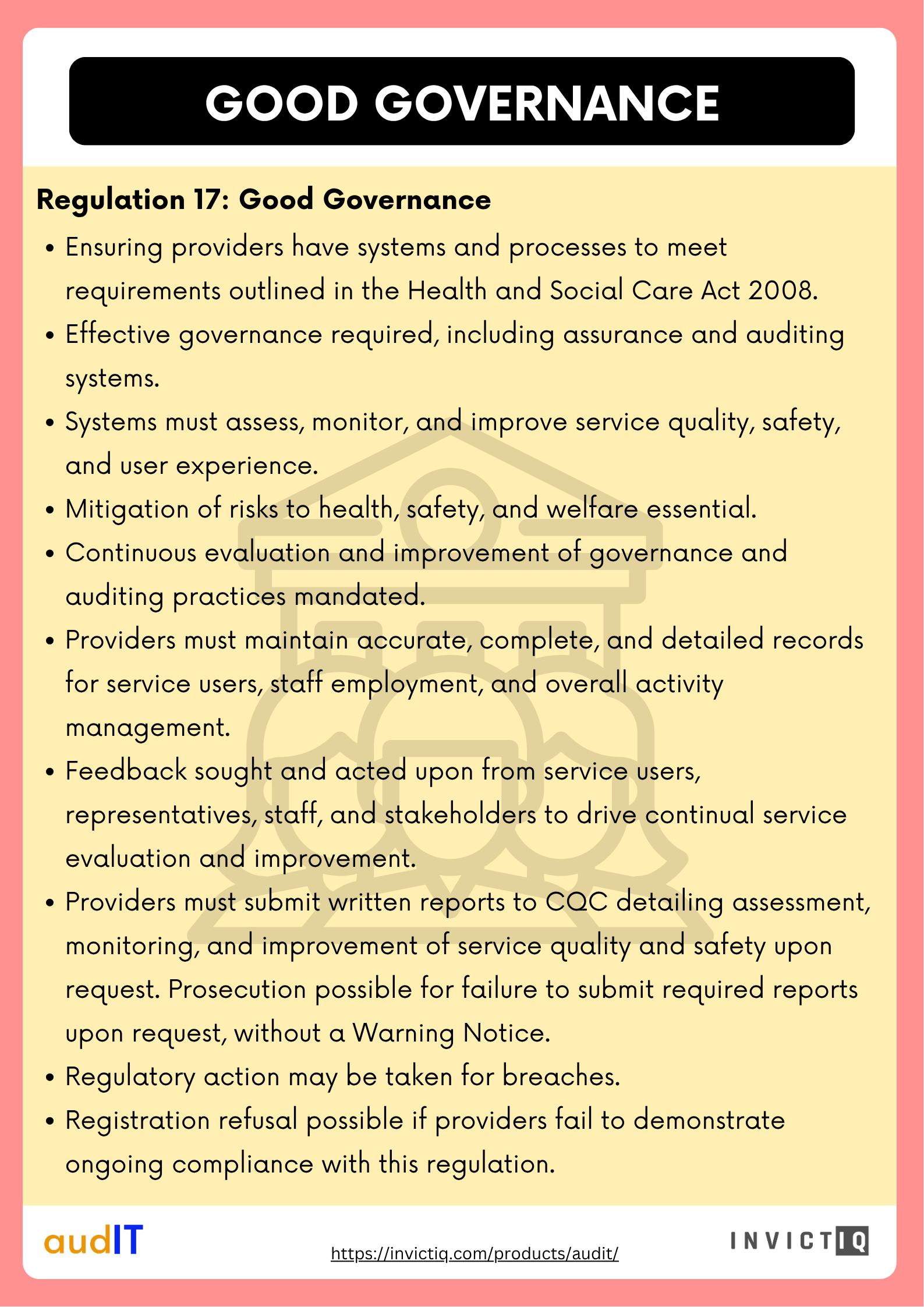
This distinction is not just good practice; it is a fundamental requirement of Regulation 17: Good Governance. CQC expects providers to have effective systems and processes to assess, monitor, and improve the quality and safety of services. This means not only recording that care has been delivered, but having independent oversight that identifies risks, monitors trends, drives improvements, and provides assurance across the whole organisation.